The GMN project is in its second phase supporting developing countries to meet the IMOs energy efficiency and GHG reduction targets.
by Blue Africa News
Two Namibian ports have rolled out a digital port call optimisation platform, enabling seamless real-time data exchange among critical players in port operations.
Under Global Maritime Technology Cooperation Centres Network, the Global Maritime Network (GMN) Phase II project’s digital solution is being piloted at the Ports of Walvis Bay and Lüderitz by the International Maritime Organisation, through funding from the European Union.
According to IMO, the solution seeks to, among others, demonstrate how improved coordination of vessel arrival and departure times can reduce waiting periods, optimise resource use, and cut greenhouse gas (GHG) emissions.
“It is anticipated that implementing port call optimisation will enable up to 7% GHG emission reductions annually for ships while in port, with continuous data collection and analysis providing evidence of environmental benefits and scalability for wider adoption across African ports,” IMO said.
Unveiling of the pilot phase took place during the recent Maritime Technology Cooperation Centres (MTCC) Africa’s first regional workshop in Namibia, held under the theme of “Accelerating inclusive green shipping in Africa: Energy efficiency, innovation and finance for a low-carbon maritime future.”
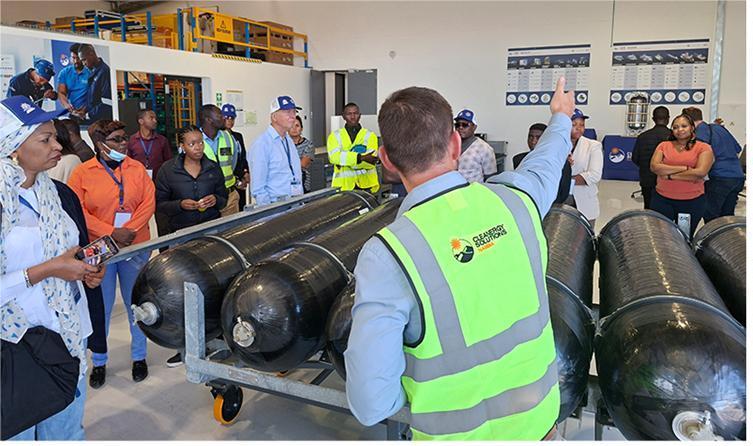
During the workshop, participants visited a renewable energy demonstration site in Walvis Bay, showcasing green hydrogen production and related infrastructure, with how emerging technologies such as green hydrogen can complement maritime decarbonisation pathways and support future low-carbon fuel options, being one of the key highlights.
The GMN project is in its second phase (2024–2027), supporting developing countries, especially the Small Island Developing States (SIDS) and Least Developed Countries (LDCs) to meet the IMOs energy efficiency and GHG reduction targets.
Namibia is quickly emerging as a crucial gateway for trade within Sub-Saharan Africa, with the Port of Walvis Bay and the Port of Lüderitz being developed to increase their readiness for alternative fuel handling, under a cross-border hydrogen pipeline between South Africa and Namibia to be developed by mid-2026.
Oliver Ochieng, Blue Africa News