
The project includes the construction of a 2000-kilometre pipeline, stretching from Walvis Bay in Namibia, through Botswana and to Bulawayo in Zimbabwe.
by Blue Africa News
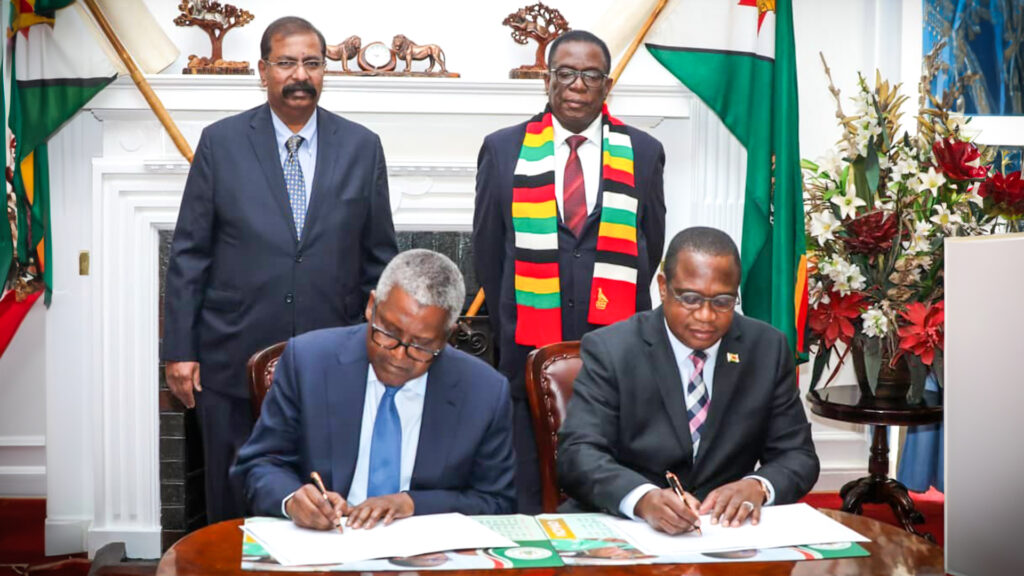
Africa’s richest man, Nigerian industrialist Aliko Dangote has signed a landmark US$1 billion investment agreement with Zimbabwe, marking one of the most significant private-sector investments in the country in recent years.
The agreement spans mining, cement production, coal, petroleum, fertilizer, and power generation, to be delivered by Dangote Industries Limited Group, one of Africa’s largest industrial companies.
From the blue economy point of view, the project includes the construction of a 2000-kilometre pipeline, stretching from Walvis Bay in Namibia, through Botswana and to Bulawayo in Zimbabwe.
If fully executed, the pipeline would reshape regional energy logistics, reduce import costs and turn Zimbabwe into a key inland distribution hub in the region, in what observers say is the “orchestration of success.”
“Aliko Dangote isn’t just buying assets; he’s investing in an economic equation,” said David Adlam, an enterprise architect.
“When a continental giant commits billions to two Southern African nations, it’s not a gamble—it’s a calculated, strategic move driven by a deep understanding of what I call The African Trifecta. And the truth is, Africa doesn’t need to mimic success, it needs to orchestrate it,” he added.
“Aliko Dangote’s entry into Zimbabwe represents a strategic alignment between private sector innovation and national development vision. This is the kind of partnership that accelerates industrialisation, job creation, and regional economic power,” said Archiford Matarino.
While Zimbabwe will gain industrial capacity, job opportunities and a potential reduction in supply-chain vulnerabilities, the investment will extend Dangote’s footprint into the Southern African market.
Recently, he met Zambia President Hakainde Hichilema in Lusaka, where the industrialist expressed readiness to partner with the Zambian government, in harnessing the country’s coal deposits, and help bridge the power deficit.
According to ZNBC News, the collaboration seeks to boost Zambia’s energy capacity, enhance local manufacturing, and promote value addition to our natural resources.
Oliver Ochieng, Blue Africa News