Kenya’s President Ruto says the establishment of LVBC demonstrates collective resolve to protect a shared ecosystem.
by Blue Africa News
Kenyan President William Ruto has reaffirmed the commitment of East African Community (EAC) member states to safeguarding Lake Victoria, emphasising the need for coordinated regional action to curb pollution and protect the shared ecosystem.
A World Bank study in March 2025 revealed that over the past 40 years, Lake Victoria’s water quality has declined due to pollution from agricultural runoff, untreated wastewater, and industrial waste, threatening the livelihoods and sustainability of over 40 million people in East Africa.
“If urgent action is not taken, the lake’s deterioration could deepen poverty, increase environmental risks, and threaten the region’s long-term sustainability,” the study warned.
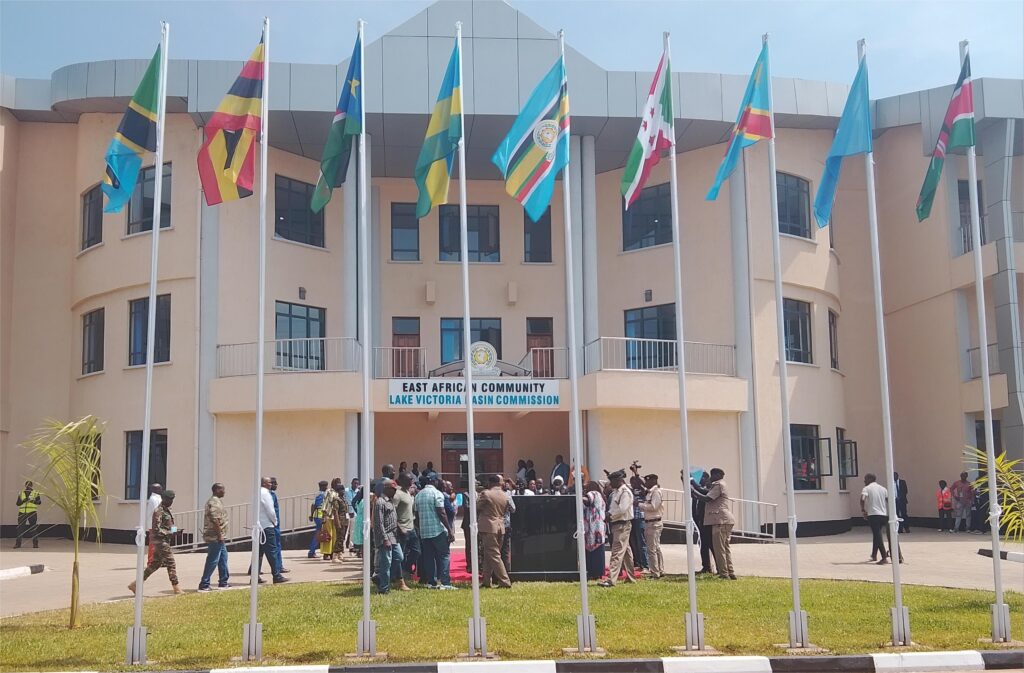
In a speech delivered on his behalf by Beatrice Askul, Kenya’s minister for EAC and regional development during the inauguration of EAC Lake Victoria Basin Commission (LVBC) headquarters in Kisumu on November 29, 2025, president Ruto said establishment of LVBC demonstrates a collective resolve to protect the shared ecosystem through a set of initiatives.
The initiatives include science-based policy coordination, joint efforts against pollution, cross-border fisheries management, climate resilience measures, protection of biodiversity and natural habitats.
“This modern headquarters will serve as a center of excellence for environmental stewardship, research, innovation, and policy leadership in the Basin,” said Ruto, current chair of the EAC heads of state summit.
“The East Africa community stands at a defining moment and Kenya remains firmly committed to working with all partner states to build a stronger, more united, and more prosperous region,” he added.
The LVBC headquarters dream dates back to 2008 when the Kenyan government donated a 2.8-acre piece of land along the shores of Lake Victoria in Kisumu. Construction of the two-storey building commenced in 2020, with USD$3.54 having been spent by the end of construction. The money was raised through member states’ equal contributions.
Additionally, GIZ, KFW, the European Union, UNEP, UNESCO and the Africa Development Bank (ADB) among other organisations played crucial technical and financial roles to turn the vision into reality.
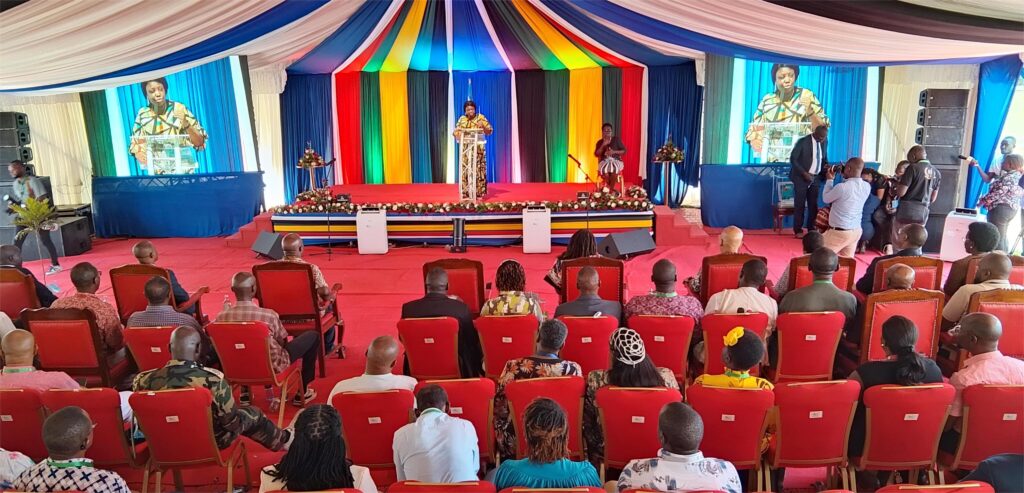
Beatrice Askul, Kenya’s minister for EAC and regional development representing president William Ruto during the inauguration of EAC Lake Victoria Basin Commission (LVBC) headquarters in Kisumu on November 29, 2025. Photo/Blue Africa News
LVBC, one of the EAC’s nine institutions, is the only one headquartered in Kenya with the rest, including Lake Victoria Fisheries Commission, University Council, East Africa Development Bank, Swahili Commission and Research Commission being spread across Uganda, Rwanda and Tanzania.
The Lake Victoria Basin Commission was established under Article 1142B of the East African Treaty to coordinate sustainable development and manage Lake Victoria’s ecosystem.
“I am happy to report that LVBC’s mandate – to promote, facilitate and coordinate sustainable development and poverty reduction across the basin – perfectly aligns with our ambitions in Kisumu County,” said Kisumu governor Anyang’ Nyong’o, in a speech read on his behalf by his deputy, Mathew Owili.
His administration, he said, is ready to strengthen collaboration with LVBC to accelerate programs in aquaculture enterprise development, fish feed production, cold-chain and value addition infrastructure and eco-innovation, digital platforms and sustainable tourism.
“What was once a dream has become a reality,” said a beaming Masinde Bwire, LVBC Executive Secretary.
“This state-of-the-art facility will serve as a hub for coordination research, and innovation, thus strengthening our capacity for environmental stewardship, transboundary collaboration, and socio-economic transformation through the basin,” he added in comments supported by Veronica Nduva, EAC Secretary General.
The inauguration was attended by delegations from EAC’s member states, including Kenya, Uganda, Rwanda, Tanzania, South Sudan, Burundi, and the Democratic Republic of Kenya (DRC).
Oliver Ochieng, Blue Africa News