
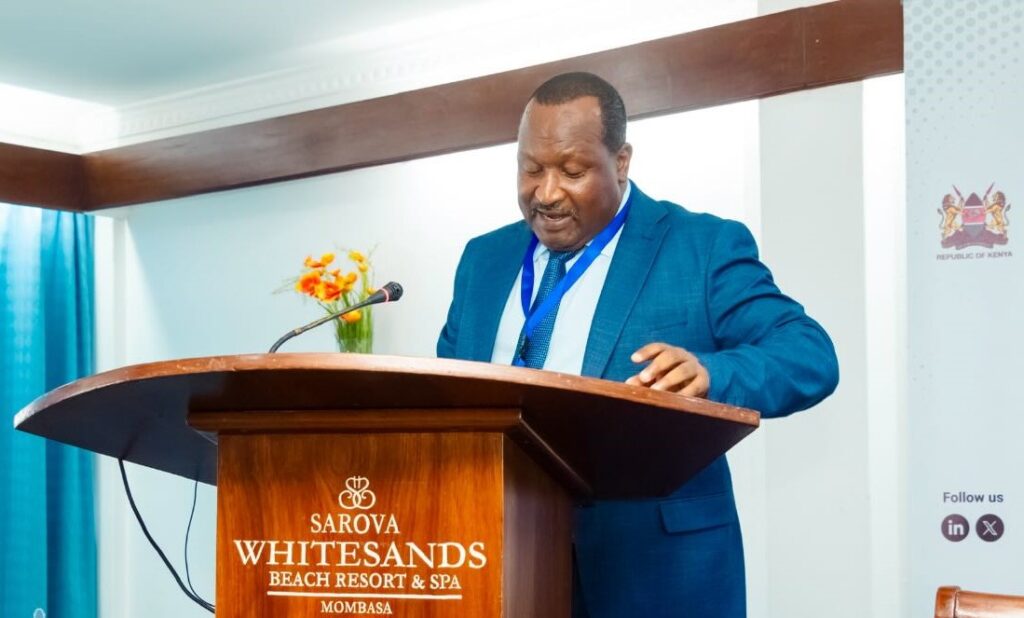
Delegates meet in Mombasa for a discourse on green shipping, port decarbonisation, maritime innovation and policy alignment in Africa.
by Blue Africa News
The Association of African Maritime Administrations (AAMA) has highlighted effective coordination among its members as critical to strengthening Africa’s voice in global maritime affairs.
Addressing delegates during the opening ceremony of the 2026 AAMA technical workshop (9-11 February, 2026) in Mombasa, Kenya, AAMA chairman Omae Nyarandi, said they are focused on creating more platforms for quality engagements on maritime issues, going into the future.
“We will expand the frequency and quality of coordination among our members and create more platforms for alignment ahead of major decision points,” said Nyarandi, who doubles up as the Director General, Kenya Maritime Authority (KMA).
“We will also continue to bring administrations together, technically, strategically, and politically, so that Africa’s voice is not only united but also prepared.”
His sentiments were echoed by Ambassador Ali Mohammed, special envoy for climate change at AAMA. “In a global system under strain, Africa’s strength lies in shared understanding, coordination, and informed engagement — not fragmented responses,” he noted.
Themed “Aligning Africa’s maritime transition with green industrialisation opportunities,” the event brings together about 70 participants from 30 African countries, as well as representatives of the African Union (AU), providing a strategic platform for African maritime administrations to engage on the continent’s transition towards sustainable, low-carbon, and resilient maritime systems.
By the end of the workshop, delegates will be expected to champion best practices on green shipping, port decarbonisation, maritime innovation, and policy alignment, while exploring how the maritime sector can catalyse inclusive economic growth, industrial development, and climate action across Africa.
Similar forums have in the past been held in other member states including South Africa, Togo and Nigeria.
AAMA’s main aim, the organisation says on its website, is to ensure the establishment of maritime authorities in each country on the continent, besides ensuring the harmonisation of policies and regulations to ensure the equitable growth of the sector on the continent with the aim of facilitating greater African integration through trade.
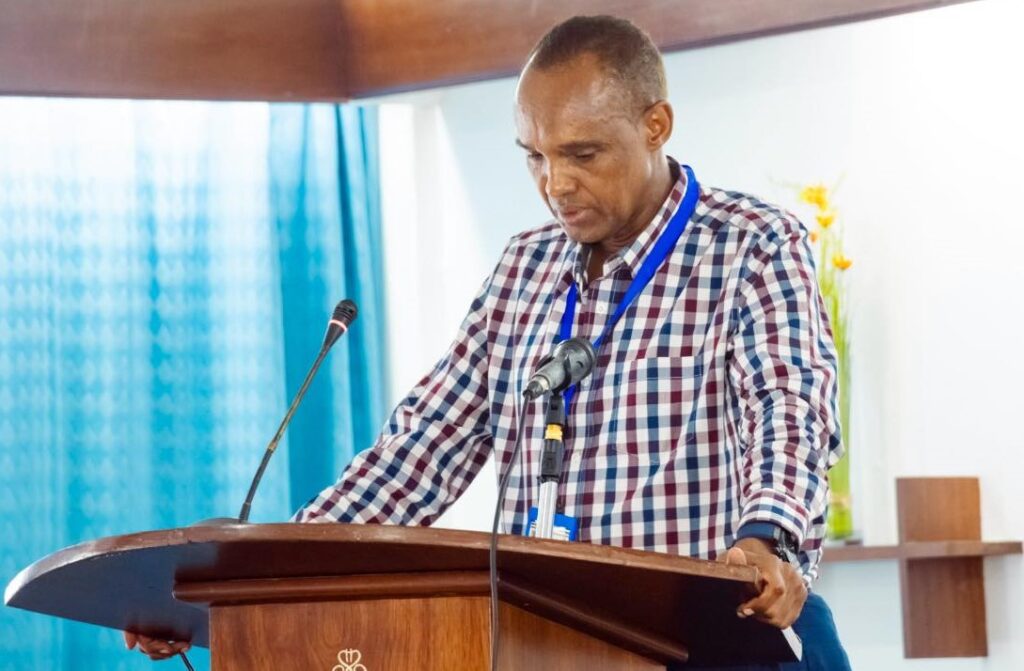
Ambassador Ali Mohammed, special envoy for climate change at AAMA speaking on February 09, 2026 during the ongoing workshop in Mombasa. Photo courtesy: KMA
Meanwhile, Somalia’s federal Cabinet has approved a maritime cooperation agreement with Türkiye, covering trade development, ship traffic management, port modernisation, and mutual recognition of seafarers’ certificates.
Additionally, the pact provides for technical cooperation, knowledge-sharing, and equal treatment in port services.
According to Abdulkadir Mohamed Nur, Somalia’s minister of ports and marine transport, the agreement does not only deepen the nation’s relationship with Türkiye, but it also comes as a major cog in helping Somalia build a resilient and competitive maritime sector.
“I commend the cabinet for approving a set of strategic maritime agreements that mark a significant advancement in strengthening Somalia’s maritime governance and international standing,” said the minister in his post on X (previously Twitter).
“Through enhanced cooperation with the Republic of Türkiye and accession to key international conventions, we are modernising our ports, promoting safe and efficient maritime trade, protecting our marine environment, and upholding the rights and welfare of our seafarers.”
“These actions reflect our firm commitment to aligning Somalia with global maritime standards and building a resilient, competitive, and sustainable maritime sector that supports national development,” he added.
Alongside the bilateral deal with Türkiye, Somalia also formally joined three major international conventions. They are the International Convention on Tonnage Measurement of Ships (1969), the Nairobi International Convention on the Removal of Wrecks (2007), and the Maritime Labour Convention (2006).
The new developments come as a strong indicator to Somalia’s ambition of ‘punching above its weight’ in regional maritime issues. The 2024 Container Port Performance Index (CPPI) report, jointly released by the World Bank Group and S&P Global Market Intelligence ranked Somalia’s Mogadishu port among the top 10 in Africa, and 163rd globally, ahead of Madagascar’s Toamasina (177), and Sierra Leone’s Freetown (216).
Mozambique’s Beira was ranked 292nd while Tanzania’s Dar es Salaam, the port of Djibouti and Kenya’s Port of Mombasa were ranked 360th, 364th and 375th respectively.
Oliver Ochieng, Blue Africa News