Governments urged to mainstream the blue economy into national plans.
by Blue Africa News
The United Nations Economic Commission for Africa (ECA) has called for greater infrastructure investments in Central Africa, geared towards unlocking the potential of the blue economy in the region.
Central Africa comprises countries such as Cameroon, Congo Brazzaville, Equatorial Guinea, Chad and Gabon, which possess extensive coastlines that come with huge opportunities for beach tourism and ecotourism.
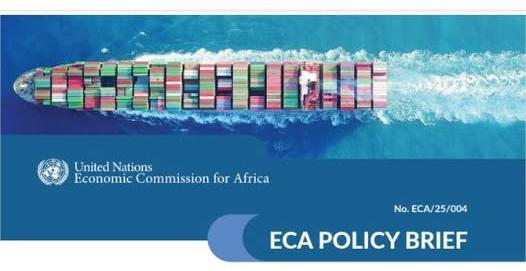
ECA in its recently published policy brief titled “Unlocking the potential of the blue economy in Central Africa,” said increased investment should be facilitated in enabling infrastructure and technologies for priority blue economy sectors, including by using public and development finance to build the necessary physical infrastructure that will stimulate private sector investment in existing and emergent sectors.
For example, the brief says, ports with cold storage, dredging equipment and related coastal and lakeside infrastructure could facilitate growth in aquaculture, tourism and hydroelectricity frameworks, challenging governments in the region to mainstream blue economy into national plans.
“Governments must mainstream the blue economy into national plans, allocate resources and ensure local stakeholder engagement, which includes prioritizing and supporting national blue economy strategies, allocating budgets for their development and fully ratifying regional frameworks,” the brief recommends.
“Countries should tailor regional strategies to their unique contexts, prioritizing sectors that align with their needs and advantages while balancing economic growth with sustainability. Such techniques as marine spatial planning and integrated coastal zone management should be used to ensure sustainability.”
With massive opportunities in fisheries and aquaculture, trade and transport, and tourism and recreation sectors, the blue economy offers a ‘through pass’ for the region’s economic transformation.
However, challenges persist, and they have to be urgently addressed. The challenges include failure to prioritise the blue economy, fragmented governance, data and policy gaps, infrastructure deficits and limited financing and investment.
“Despite the potential of the blue economy, its innovative sectors are underfunded. Public and private investment is critical to unlocking growth, but financial constraints persist due to competing priorities and limited access to international funding mechanisms,” the policy brief says.
The report linked climate change and ecosystem degradation to the shrinking of Lake Chad by 90% since the 1960s, with the decline contributing to a 45% slowdown in population growth and to economic welfare losses of 9% in Chad and 6% across the Central Africa region.
“Lake Chad’s story highlights the stark risks confronting Central Africa and the scale of the opportunity that will be lost without urgent, coordinated action to protect the subregion’s extensive and diverse aquatic resources,” warned ECA.
In conclusion, ECA expressed readiness to support Central African States that are interested in applying the blue economy valuation toolkit (blue economy policy handbook 2016) to local contexts and other approaches to assessing natural capital.
In East Africa, findings of a new study titled “Kenya marine fisheries: The next frontier for economic growth?” show that despite all the blue economy potential of aquatic systems in Kenya, the country has been unable to satisfy its annual fish demand.
The findings published by Michigan State University Press reveal that production in major lakes such as Victoria, Turkana, Naivasha and Baringo has declined mainly due to overexploitation and environmental changes, similar to what is happening in Central Africa.
Oliver Ochieng, Blue Africa News