
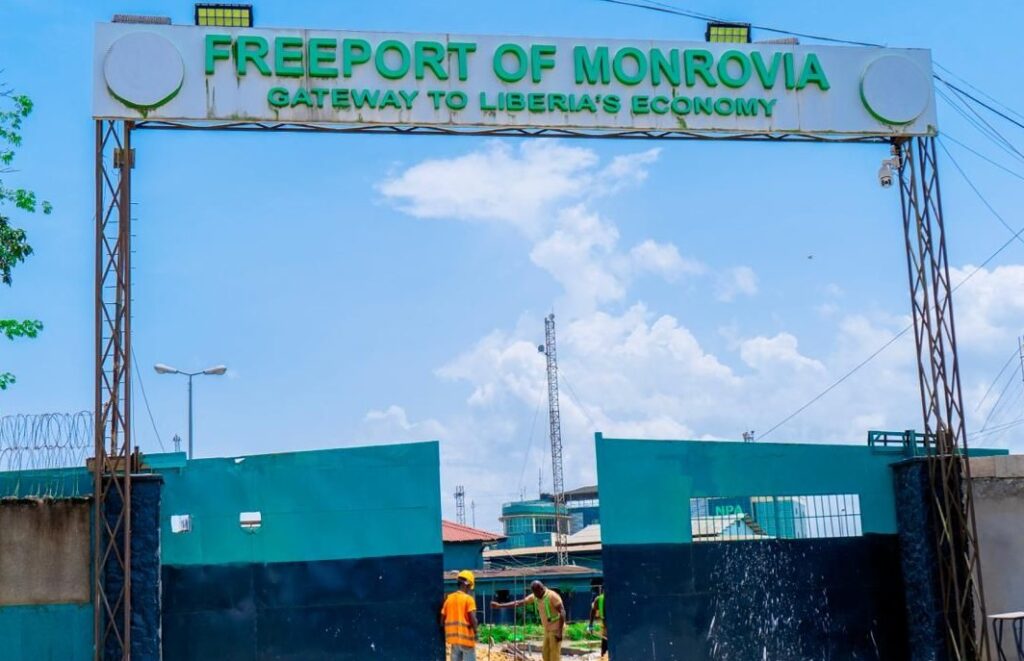
NPA breaks ground to install an automatic digital gate system at the Freeport of Monrovia, focused on using facial recognition technology for pedestrian access and automatic license plate recognition for vehicles.
By Blue Africa News
Liberia’s Freeport of Monrovia is taking a significant step toward enhancing efficiency and security by pursuing the installation of an automated digital gate system.
The initiative aims to reduce congestion, speed up gate access, minimise unnecessary human interaction, and strengthen revenue assurance.
The Freeport of Monrovia – the largest in the West African country is among Liberia’s four major seaports managed by the National Port Authority (NPA), alongside the Port of Buchanan, the Port of Greenville and the Port of Harper.
On Monday, April 20, 2026, NPA announced that it had broken ground to install an automatic digital gate system at the Freeport of Monrovia, hinged on using facial recognition technology for pedestrian access and automatic license plate recognition for vehicles.
The project, the authority says, will be completed and dedicated for use by the end of May 2026.
Once operational, NPA said, the system will digitally record movements through the port gates, giving the authority stronger control over access, better operational visibility, and more reliable records for security and management purposes.
“This project is about making the Freeport safer, faster, and smarter,” said James Richard Bernard, NPA Deputy Managing Director for Administration, adding that the investment reflects NPA’s commitment to building a more secure, efficient and commercially disciplined port system.
By replacing manual processes with automated verification and digital records, the authority anticipates faster entry and exit, shorter queues, better traffic flow, and tighter control over gate activity.
Digitisation of port operations in Liberia forms the bulk of NPA’s five-year strategic plan covering 2025–2030, launched in October 2025 with an intent of driving port transformation in Liberia.
Christened reset plan, the strategy focuses on reforming governance, enhancing efficiency through the use of technology, strengthening financial management, establishing inland terminals and transforming infrastructure.
During the launch, finance and development planning minister Augustine Kpehe Ngafuan challenged the team at NPA to do more than just plan, urging them to make sure “such a plan is implemented to help Liberia positively.”
“When you’re planning, thinking, or strategising, some will think you’re doing nothing. If you do not plan well, you will fail well. It’s one thing to do the plan, it’s another to work the plan,” said the minister.
Sekou Dukuly, NPA’s Managing Director termed the $550 million strategy “a bold move on port transformation,” and a key step toward achieving Liberia’s economic prospects.”
“Our ports have been treated for so long as just revenue collection points. Today, we are changing that narrative,” Dukuly said.
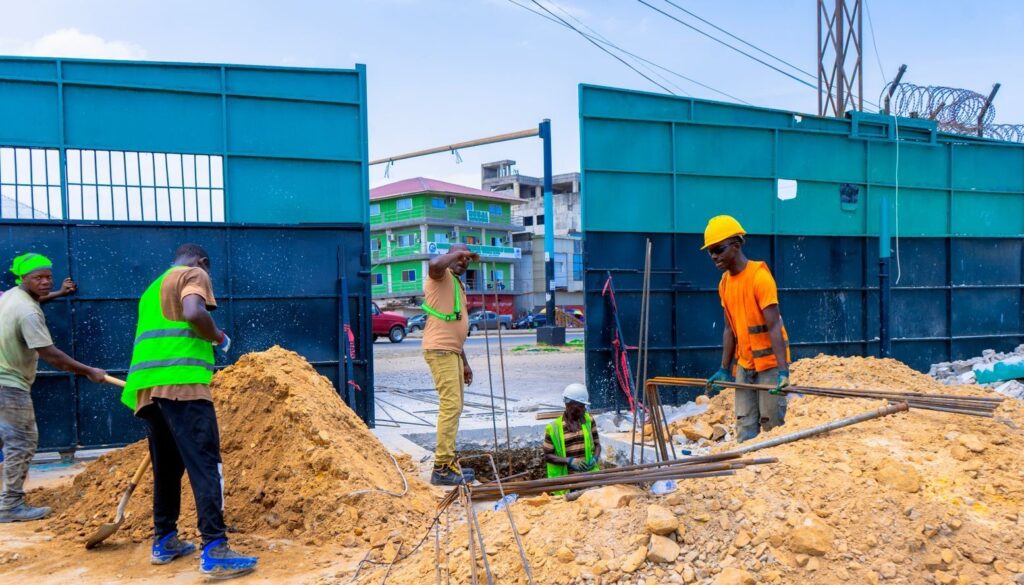
Installation of an automatic digital gate system at the Freeport of Monrovia. Photo courtesy: National Port Authority (NPA).
According to the United Nations Trade and Development (UNCTAD), Liberia surpassed Panama as the world’s largest flag state of registration in terms of dead weight tonnage in 2022, with 378.3 million dead weight tons in its fleet, recording a 12.7% growth in ship tonnage between 2022 and 2023.
Similarly, Liberia takes second place after the Panama ship registry in terms of ship numbers, with 4,821 vessels in the Liberia-flagged fleet. The average vessel size flagged in Liberia is 78,479 dead weight tons.
And when measured by value, Liberia has the second-largest share of vessels registered, at 11.78% compared with Panama’s 12.86%.
In 2022, ships flying the flags of Liberia, Panama and the Marshall Islands (the world’s three leading flags by tonnage and number of vessels), collectively accounted for more than one third of shipping’s global carbon emissions.
The high numbers come with challenges which range from infrastructure gaps to financial constraints. However, the success of ongoing reforms will depend heavily on consistent implementation, as correctly put by the finance minister.
Last year, Jens Meier, president of the International Association of Ports and Harbours (IAPH) and CEO of the Hamburg Port Authority appealed to port managers worldwide to embrace digitalisation, calling it a smart and secure manner to strengthen supply chain resilience.
Oliver Ochieng, Blue Africa News