International Maritime Organisation (IMO) expresses clear commitment to technical assistance, training and other essential services, across the globe.
by Blue Africa News
The International Maritime Organization (IMO) has settled on “From Policy to Practice: Powering Maritime Excellence” as the World Maritime Day (WMD) theme for 2026 and 2027, setting sail for real results within the next two years.
According to IMO, the move highlights the organization’s clear commitment to put policies into practice, by providing technical assistance, training and other essential services, across the globe.
WMD is marked every last Thursday of September, focusing on the importance of shipping and other maritime activities, with a particular emphasis on the work of the IMO.
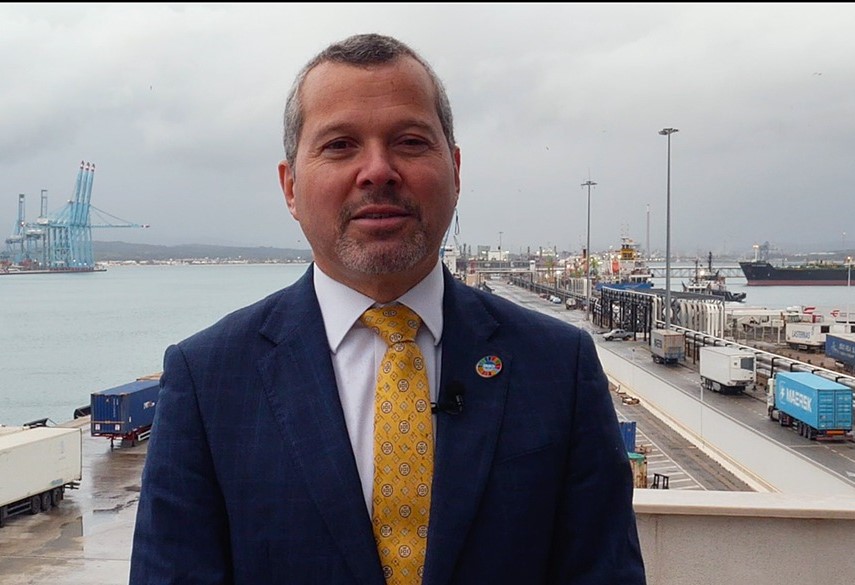
In a video message pertaining to the theme, IMO Secretary-General Arsenio Dominguez said for nearly 80 years, the London, United Kingdom (UK) headquartered Organization has built the framework for global fishing, but the challenge lies in the slow pace of implementation.
“The real test and the real responsibility lie in implementation, how we transition from policy to practice; powering maritime excellence,” said Dominguez.
The two-year theme, the Secretary General said, reflects IMO’s mission of ensuring that any framework they develop is not merely adopted in principle, but actionable to deliver tangible results for everyone who depend on the shipping and maritime activities for a living.
“When we talk about practice, we are talking about people,” said the Panamanian. “The seafarers on the ship; the people in the port; those managing ship operations, ship recycling workers, port State control officers and flag State administrators.”
Dominguez said in order to make the maritime industry truly sustainable, all stakeholders, including port authorities and line ministries globally, must ensure IMO’s high standards are felt in every port and on every deck, “not selectively, not unevenly, but globally.”
IMO, he said, is committed to powering the transition through technical cooperation and direct support calling on stakeholder to move beyond the conference room and turn collective decisions into real-world results that benefit everyone. “It is time to move decisively from policy to practice.”
As a United Nations (UN) special agency, IMO’s global framework of maritime conventions, codes and guidelines help to ensure ships operate and trade safely, efficiently and smoothly while protecting the marine environment.
The framework, the UN body says, is most effective when Member States adopt and implement IMO rules widely and consistently.
“However, audits conducted under the IMO Member State Audit Scheme (IMSAS) have found gaps in national laws and enforcement in some countries. Those gaps weaken regulations and increase the risk of noncompliance and unsafe shipping,” IMO states in one of its publications.
The “From Policy to Practice: Powering Maritime Excellence” therefore comes in handy to address this challenge, through seeking for support of Member States in deepening their understanding of IMO conventions and strengthening their ability to adopt and enforce them.
During the two-year period that the theme will be operational, IMO will work on various undertakings, include boosting countries’ capacity to apply IMO rules, through legislative support, enforcement frameworks and training, tailor legal assistance and technical support for Small Island Developing States (SIDS) and Least Developing Countries (LDCs), translate new safety standards on fuels, automation and digitalization into operational practice through updated training, oversight and risk management and equipping states to implement the IMO Strategy on the Reduction of GHG Emissions safely, consistently and in line with operational realities.
The organization will also develop practical guidance and strengthen due diligence, transparency and data-sharing to prevent unlawful practices and misuse of national flags, embed digital systems, including Maritime Single Windows into daily port operations to boost efficiency and resilience, integrate cyber risk management into safety management systems, streamline training on port operations to protect global shipping networks and implement IMO environmental instruments (beyond those for GHG emissions), including on plastics, underwater radiated noise, invasive species and ship recycling.
Oliver Ochieng, Blue Africa News