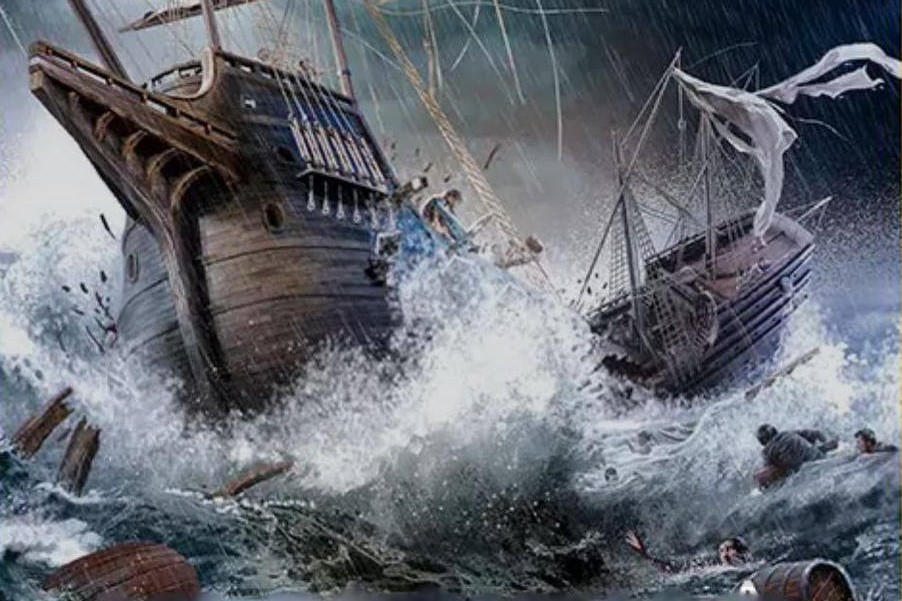
The story featuring a ship from a fleet led by Portuguese explorer Vasco da Gama will be retold in a documentary later this year.
By Blue Africa News
A TV documentary highlighting one of the most talked-about pieces of maritime history will be broadcast at the end of 2026, over 500 years after Portuguese sailor and explorer Vasco da Gama’s ship sank off the coast of Kenya.
Historians credit Vasco da Gama with the discovery of the first direct maritime route between Europe and India via the Cape of Good Hope, and across the Indian Ocean from Kenya’s Malindi to Kozhikode in India.
The discovery, considered a landmark event in global maritime affairs, was to open up European exploration and commerce with India.
According to the National Museums of Kenya (NMK), on April 5, 1524, da Gama embarked on his third and final journey from Lisbon to India, before one of his ships named the São Jorge, sank off the Kenyan coast.
Over 450 years later in 2010, the 16th century shipwreck was discovered by Caesar Bita, a maritime archaeologist and lead researcher on the 16th century Ngomeni shipwreck, in collaboration with NMK and the local community. The wreck was then surveyed, leading to its archaeological excavation and examination.
“The local community at Ras Ngomeni in Malindi have been a key cog in the excavation and preservation of this ship. Emerging evidence is confirming that the Ngomeni shipwreck is the Portuguese ship named Sao Jorge lost by Vasco da Gama in 1524,” NMK said in a recent social media post.
In November 2025, NMK and a team from German Docuvista TV company did an extensive TV documentary of the shipwreck, with the documentary set to be broadcast at the end of the year.
“Part of this documentary will feature in a 26-page cover in the National Geographic Magazine in Portugal. The magazine is available from March 31, 2026. Plan to get a copy and appreciate the good work we are doing to preserve this priceless heritage resource and also enjoy our rich underwater cultural heritage,” added NMK.
Historians and maritime archeologists hold the view that the wreck is one of several Portuguese vessels that sank along the East African coast, including those near Fort Jesus, Mombasa, which served as the nerve-centre for Indian trade hundreds of years ago.
The São Jorge ship wreck story, noted Paula Kahumbu, a wildlife conservationist and chief executive officer (CEO) of WildlifeDirect, holds great potential to revive the Malindi museum, “spark interest in marine exploration and lead to a plethora of content.”
“I’m thrilled to hear that the spark of this idea did catch flame and I’d love to see the film, articles and final exhibit. To the National Museums, Caesar and the community who discovered this wreck – Hongera (well done),” she said.
“I hope it finds its way into every school in Kenya.”
Across Africa, film is being used to document ambition, culture, success and even shortcomings within Africa’s maritime space.
In January 2026, a Nigerian short documentary exploring the West African country’s vibrant surfing culture titled “Beyond Tarkwa Bay” shortlisted for the 34th Pan African Film & Arts Festival (PAFF).
Directed and produced by Peter Oke and Rume Onosode respectively, the documentary followed Abraham, a teenage surfer who experiences liberation on the waves of Tarkwa Bay in Lagos.
And in a film titled “The Fisherman,” the main character, Atta Oko, a retired Ghanaian fisherman, guided by a mystical talking fish, embarks on a journey full of humor, heart, and unexpected insights.
In the film, Oko’s knowledge of the sea, built over decades, is challenged by younger generations using mobile phones and digital tools to track fish and manage their work.
As recently highlighted by birdstoryagency.com, he attempts a return, insisting on buying a new boat and re-entering a system that has already shifted.
Oliver Ochieng, Blue Africa News